

Workers’ Compensation: Q4 2025 Earnings Reports Show Shifting Trends
Hola, Curious Minds crew — hope you’re doing well. I dug into the Q4 2025 earnings season for publicly traded insurers that write workers’ compensation, and the picture is worth paying attention to. One well-known monoline carrier, Employers Insurance, posted a notable Q4 loss. That result isn’t an isolated blip — it highlights broader trends reshaping the workers’ comp market, particularly in California.
Table of Contents
- Quick snapshot: the headlines you need
- How I researched this (short methodology)
- What the numbers and commentary reveal
- Why reserve releases matter (short, plain-English explainer)
- California: the canary in the coal mine for CT claims
- Market structure: a bifurcated picture
- Practical implications for agencies, carriers, and buyers
- What to expect next
- Short reading list / data sources to watch
- Final thoughts — stay curious
Quick snapshot: the headlines you need
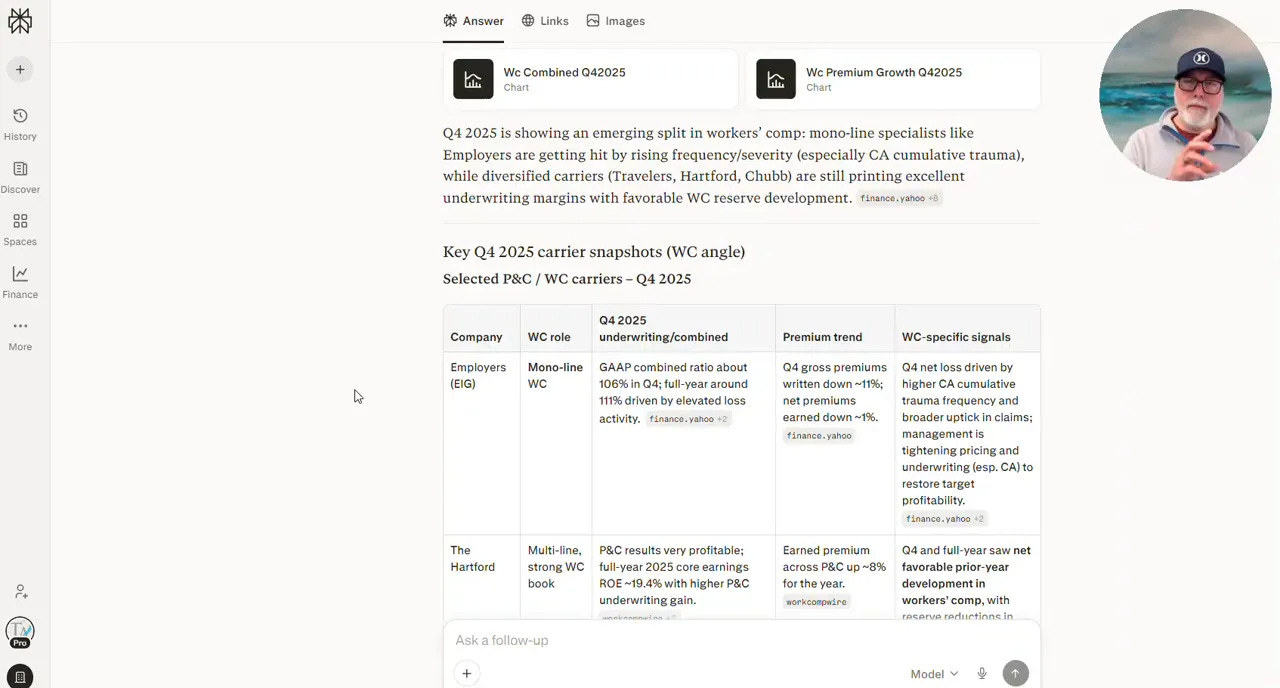
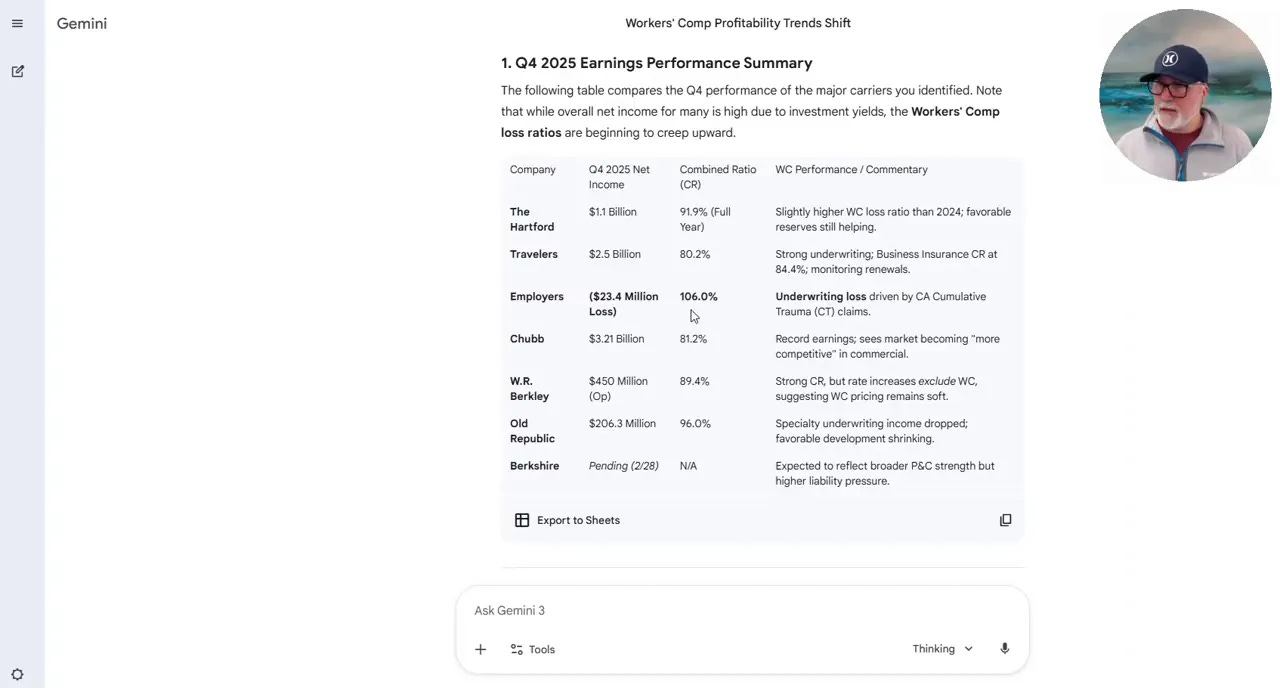
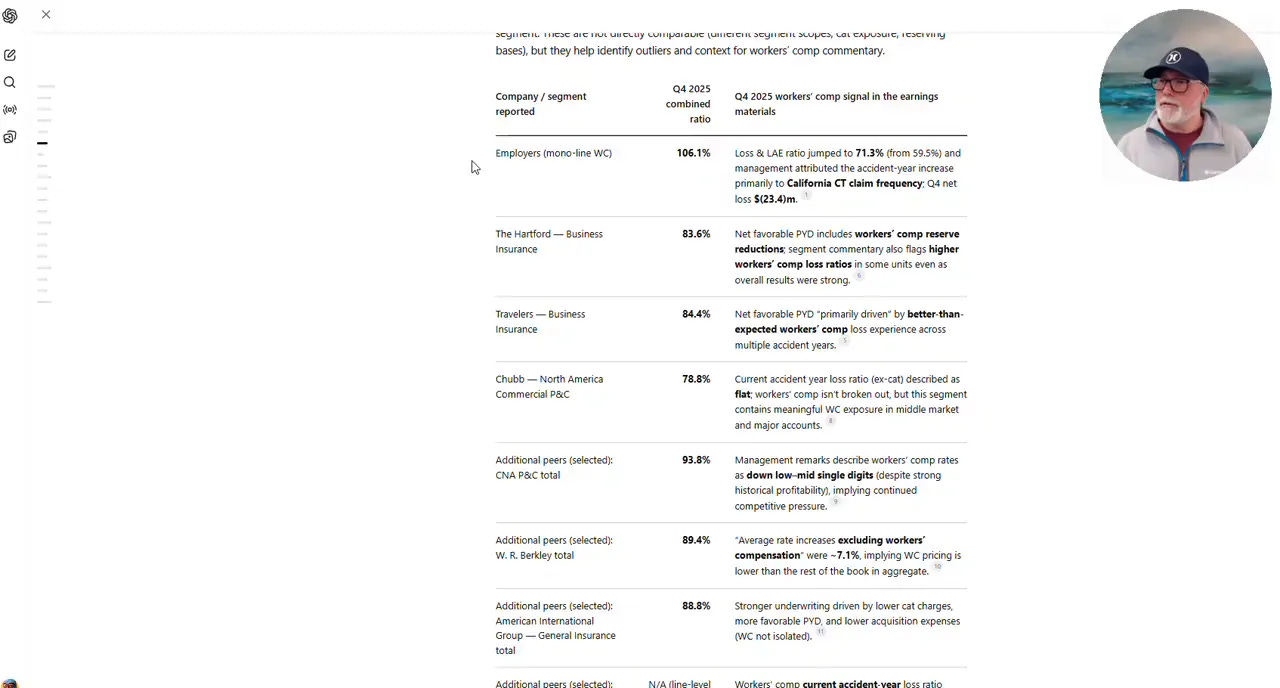
- Employers Insurance reported a Q4 underwriting loss — sources show a combined ratio of 106% for the quarter.
- Q4 net loss reported around $23.4 million for Employers; gross written premiums were down roughly 11% year-over-year for the quarter.
- Primary drivers: rising cumulative trauma (CT) claims in California — both frequency and severity — plus medical cost inflation and broader claims upticks.
- WCIRB recommended a double-digit increase last fall; the California Department of Insurance approved an 8.7% workers’ comp rate increase — the first meaningful rise in nearly a decade.
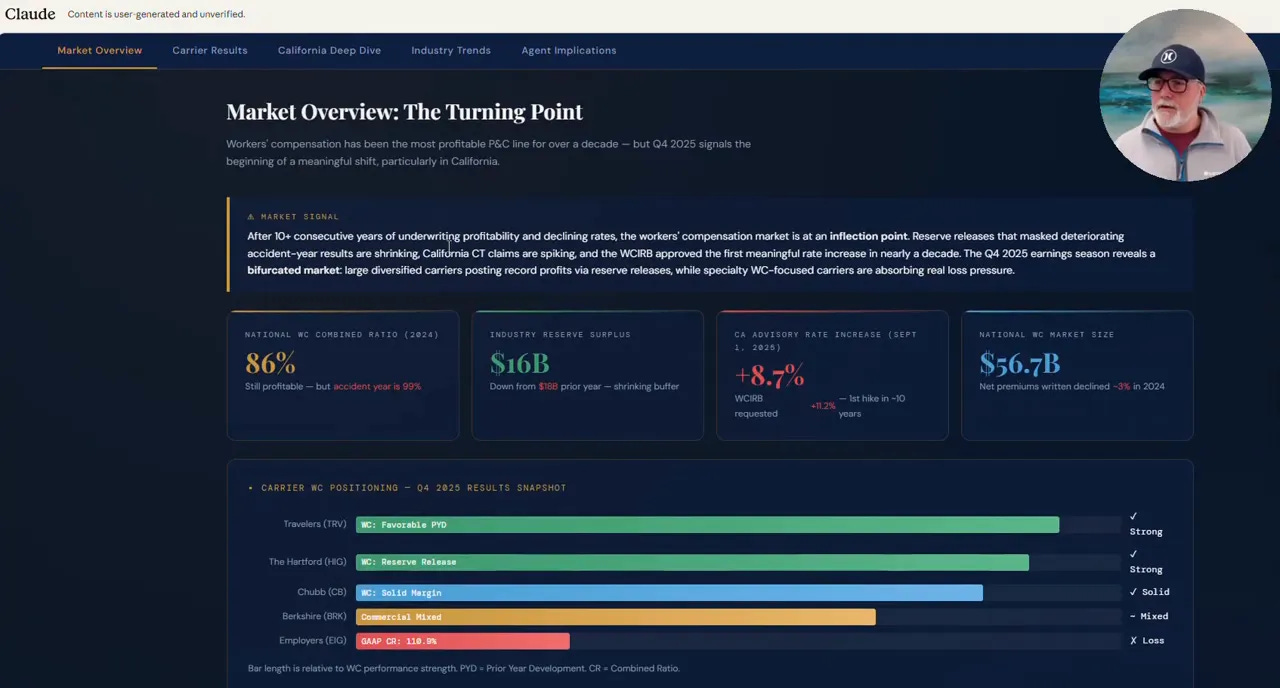
- The market is bifurcating: large, diversified carriers are reporting strong results while specialty/monoline carriers face real pressure.
How I researched this (short methodology)
I pulled together real-time search and deep-research AI tools to cross-validate earnings call commentary, filings, and industry reports. Perplexity and Gemini helped with search/summary; ChatGPT provided deeper extraction from filings; Claude generated a visual dashboard that tied the pieces together. When multiple independent sources point to the same story, the signal becomes clearer.
What the numbers and commentary reveal
Across the Q4 reporting universe, two themes stand out:
- Reserve releases are shrinking. For much of the past decade insurers benefitted from favorable reserve development — reserve releases that flowed positively to earnings. Those releases have masked weaker accident-year results for a while. Now, reserve releases are diminishing, removing that cushion.
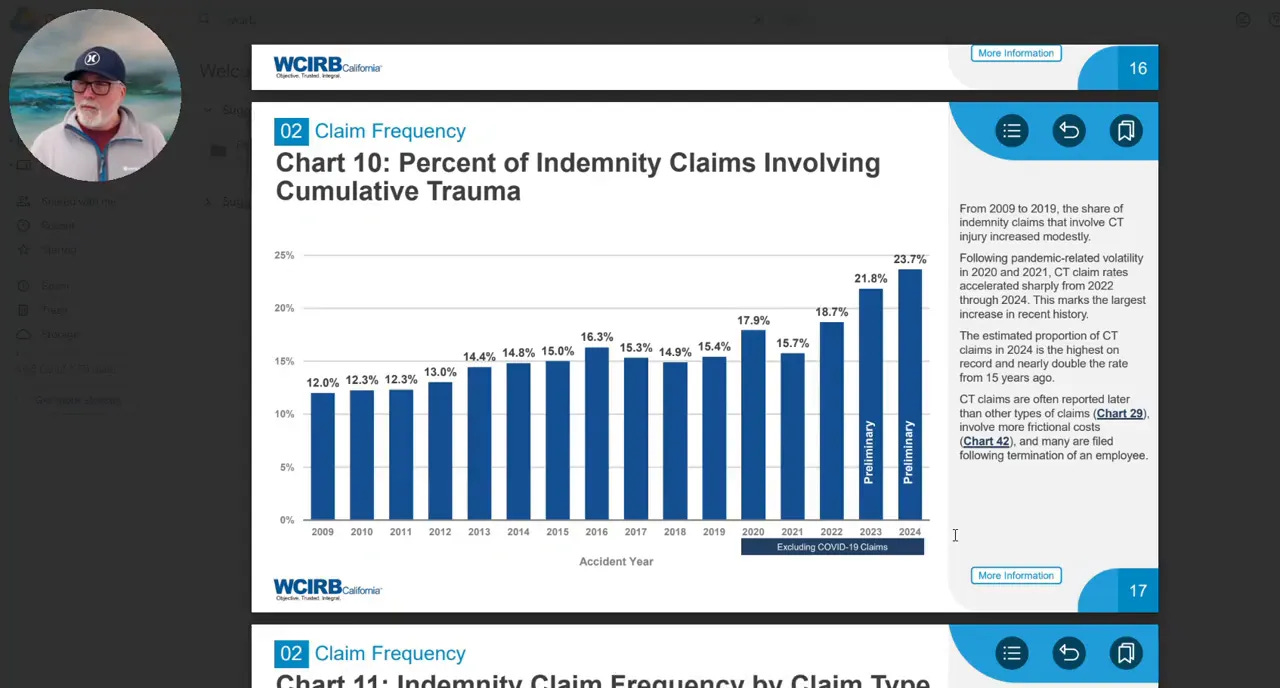
- CT claims in California are accelerating. California cumulative trauma claims (CT) have risen sharply since 2022 — both more claims and higher severities — and that trend is a central explanation for Employers’ deteriorated underwriting metrics. When a carrier has a significant book in California (Employers has roughly 35–45% of premium concentrated there), CT trends can disproportionately impact results.
Selected carrier takeaways
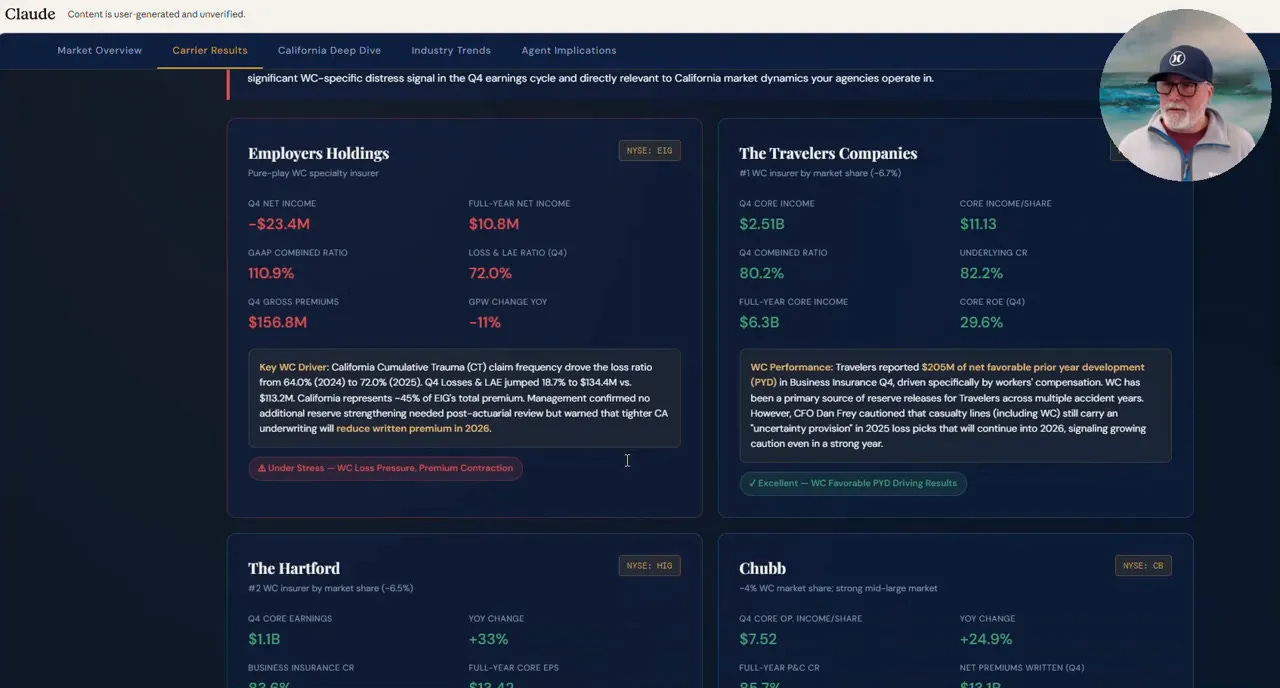
- Employers (monoline): Combined ratio reported in the ~106% range by several sources; some visualizations showed nearly 111% for the quarter. Loss & LAE ratio jumped materially (reported increases from ~59.5% to ~71.3% in some summaries). Q4 net loss ~ $23.4M; GWP down ~11% for the quarter.
- Large diversified carriers (Hartford, Travelers, Chubb, Berkshire): Many reported strong quarters with favorable prior-year reserve development and healthy combined ratios. Diversification and reserve development helped absorb pressures.
Why reserve releases matter (short, plain-English explainer)
When a claim is first reported, insurers book reserves — their best estimate of what they’ll ultimately pay. Over time, if claims close for less than originally reserved, carriers “release” those reserves back to earnings, which boosts results. That release acted as a tailwind for many carriers over the last decade. Now that reserve releases are shrinking, underlying accident-year losses become more visible.
California: the canary in the coal mine for CT claims
WCIRB’s data and commentary paint a clear picture: CT claim rates accelerated sharply from 2022–2024 — the largest increase in recent history. Because CT claims are often cumulative and medical/legal factors can amplify costs, California trends are a major headwind for carriers with concentrated exposure there.
Link to WCIRB report: https://www.wcirb.com/research-and-education/research-studies-and-reports/2025-state-system
Where regulators fit in
Last September, WCIRB recommended a sizable rate increase of 11.2%; the Department of Insurance approved an 8.7% increase. That’s an important step toward restoring pricing adequacy, but rate changes take time to flow through pricing, underwriting, and ultimately results. Insurers are already tightening pricing and underwriting in response to deteriorating accident-year experience.
Market structure: a bifurcated picture
Q4 2025 earnings show a split market:
- Large, diversified carriers — with multi-line books and reinsurance stacks — are delivering record profits (favorable reserve development helps).
- Specialty and monoline work comp carriers are facing underwriting losses as CT trends and medical inflation hit their single-line exposure.
What to expect next
We’ll likely see continued underwriting discipline, selective capacity pullbacks in specific segments, and more visible accident-year results as reserve releases normalize. The magnitude and duration of the CT trend will determine whether the market shift is temporary or a longer-term reset.
“After 10 consecutive years of underwriting profitability and declining rates, the workers’ compensation market is at an inflection point.”
Short reading list / data sources to watch
- WCIRB State of the System reports and filings (California CT trends)
- Publicly traded carriers’ Q4 2025 earnings calls and 10-Q/10-K filings
- Department of Insurance rate decisions and bulletins
Final thoughts — stay curious
Q4 2025 offered an important reminder: insurance markets cycle, concentration matters, and the masking effect of reserve releases can delay important signals. For agencies and carriers, the immediate task is to measure exposure, tighten underwriting where needed, and communicate clearly with customers about what’s changing and why.
Stay curious. Cheers!
TV